Could SPICY FOOD make you HEALTHIER!?
While spicy foods are not particularly pleasant to the taste (the sensation they can create can be even that of pain) many people love spicy food! Indeed, spices have been highly valued and fought for throughout history! So other than enhancing the taste of food, perhaps there are other more potent reasons for their importance throughout the world?
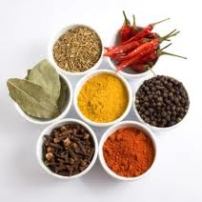
I’m reading a fascinating study* on the subject, and the authors hypothesize that adding spices to food is beneficial since they contain substances that inhibit or kill food-spoilage microorganisms (we know certain spices have antioxidant & antibacterial properties; others are powerful fungicides).
In short, the authors looked at traditional cookbooks, spices used in meat-based dishes, and country’s climate (since meat products in hot temperatures would spoil fastest).
The most used spices for the ~4,580 recipes analyzed were onion and pepper, followed by garlic, capsicums, lemon/lime juice, parsley, ginger, and bay leaf. The average spice was found to inhibit ~ 67% of bacteria (garlic, onion, allspice, and oregano inhibit EVERY bacterium they’ve been tested on!). It was found that more powerful spices were used more frequently in hotter climates= recipes from those countries have more antibacterial potential! Lemon and lime juice use appears to be strange- it is used a lot, while it has one of the lowest effects against bacteria. These juices, however, are syngergists (as well as pepper)! They act synergistically to enhance antibacterial effects of other spices.
HMMM…
Now as I was reading this, I thought- maybe hotter countries simply have more spices growing there? The authors found out that there was no relationship between a country’s mean annual temperature & number of spice plant species growing there.
Another problem I imagined- what about cooking? Perhaps heat destroys some of the antibacterial and other effects of spices? Turns out spices are thermostable and have similar effect even after steam-distillation.
INTERESTING fact I didn’t know- plant secondary compounds & essential oils can contain mutagenic, carcinogenic, and allergenic effects.. and while protecting oneself from food-borne illnesses outweighs the dangers of these chemicals, it would explain why kids and some pregnant women might dislike spices. [in the modern obesogenic food environment with french fries and twinkies, potentially negative health of spices should not be on top of our concern list]. Also important- medicine is pretty much a low dose of poison…so spices have been used to counteract ailments of all sorts (e.g. garlic for pneumonia, worms, etc). Animals are capable of self-medicating with strong-tasting vegetation as well.
In CONCLUSION, the authors believe that the main reason for spicy foods is to take advantage of the antimicrobial actions of the secondary compounds in plants… which contributes to survival, health, and reproduction. Therefore, many people (especially in hot climates) prefer spicy food. If you like it HOT- GOOD FOR YOU 😀
* Billing, J., & Sherman, P. W. (1998). Antimicrobial functions of spices: why some like it hot. Quarterly Review of Biology, 3-49.
p.s. this of course is not to be the only explanation why spicy foods are liked, there is also social learning and what not 😉

 Mariya V. PhD