Last week I participated in the Summer Program on Emerging Issues in Food & Drug Law at  Georgetown Law. Other than making D.C. my most favorite US city ever, I met interesting people from various health organizations in US, EU, India, China, and South America!
While a lot of the information went way over my head (considering I have no background in law or drugs!), there are a couple of interesting things I learned:
- US imports a lot of food! About 80% of seafood and about 50% of fruits and 20% of vegetables is also imported.
This means that food safety monitoring requires a global regulatory environment and FDA (food&drug administration) has posts worldwide (China, India, Mexico, Costa Rica, London, Brussels, Africa). Most people I interview are concerned with food’s effect on their long-term well-being mainly because they don’t see food safety in terms of immediate harm as a big issue. That is the privilege of living in a well-regulated country like the US.
Our speakers gave an example of locally produced cheetos-like snacks somewhere in Africa that, aside from the fact that’s not a healthy thing to consume in general, were found to contain actual orange paint, rat droppings, and some heavy metal contamination. Another example of poor food safety regulation that we don’t have to worry about here is a story from my mom: around the time Ukraine became independent she bought a chocolate bar with raisins. After being unable to chew on the raisin for awhile, she washed it to discover it was a raison-shaped PIECE OF PLASTIC. Now THAT is scary. 😦
- Differences in the way US and EU (European Union) regulates foods.
The most crude way to describe the difference is that EU takes a precautionary approach (e.g. GMOs might have bad effects years later so we’d rather limit them) while US takes a free market approach (there’s no evidence GMOs have adverse health effects, so why limit them?). I have to say most of us in the auditorium sided with the EU mentality as waiting for evidence that something is bad is more reassuring than proceeding due to lack of evidence. We know science takes time and the issue with GMOs is that their safety studies would have to take decades.
- FDA regulations!

The FDA does a lot of great work yet it can be quite hard to understand this agency’s ways. Mainly I was interested in how they regulate food health claims on products. I found out that if a product
makes a general structure/function claim (e.g. nuts are good for your heart! carrots maintain good eyesight!) the FDA doesn’t care much as they have less authority over such statements. If you, however, make a HEALTH CLAIM (e.g. nuts prevent/cure heart disease!), the FDA has authority to conduct a pre-market review of such health claim. They need to see that the proposed food’s health claim is TRUE according to a narrow set of guidelines/that the product successfully performs the promised benefit: e.g. that consuming nuts actually affects a certain established biomarker of heart disease (e.g. one established biomarker would be LDL cholesterol). If your product has a health claim the FDA has not reviewed they would send you warming letters and can shut you down.
I understand this part can bother a lot of people who are trying to eat healthily. E.g. several years ago FDA sent warning letters to a walnut company warning them about claiming walnuts prevent heart disease (i believe?). A lot of people in the health community were outraged. But think about a different example- Kellogg mini wheats. They claimed that kids will perform 20% better in school when eating them for breakfast. They then claimed the cereal increases immunity. Then Activia claimed their yoghurt benefits digestion. All lost in lawsuits as their own studies did not support such claims. So, while many of us are biased toward natural foods and were mad about the walnut case, you see where such regulations come handy and are necessary across the board. Also, the claims have to be supported by recognized science, which means that if some studies show your product is amazing for condition X, while others studies show no effect you have to report about both in your claim.
- Something i was particularly interested in was comparing food quality standards (vs. food safety that FDA is mostly concerned with) in Ukraine and the US.
The Ukrainians I interviewed last summer had very low trust in the quality of food produced in Ukraine. one of the main reasons was the fact that after the fall of USSR, the Government Food Quality Standards became weak and prone to manipulation by the industry. During USSR, there were set food standards called “Recipes” that spelled out what makes up a certain product. E.g. a sausage ought to have a certain percentage of high quality meat.

Nowadays manufacturers can create their own “recipes” and thus make “sausage” that is 80% soy. I asked the food standards question and learned that US has “standards of identity” which is also a “recipe”. These standards of identity are mandatory, federally set requirements that determine what a product must contain to be marketed under a certain name in interstate commerce. So an ice-cream is supposed to have real milk, for example, and some other ingredients. Just like in Ukraine, though, manufacturers can bypass these standards by simply labeling their product something else (e.g. “Gelato” you might see on the shelf is not called ice-cream for a reason- it does not have the correct ingredients to be called an ice-cream). Violating standards of identity can be either good or bad for us. Good: perhaps new recipes of old products can contain healthier products (e.g. almond milk in an ice-cream type of dessert), but the dark side here is that manufacturers can pack products with cheaper unhealthier ingredients. In Ukraine, the second situation is the case: many foods have low quality (e.g. a lot of people distrust Ukrainian butter as majority of it is actually palm oil). More here http://uspolitics.about.com/od/usgovernment/a/fda_identity.htm
Unrelated to the topic of food.. i learned that counterfeit drugs is a scary issue! Prescription drugs are quite easy to “fake” and most of them look identical to the original product (to the na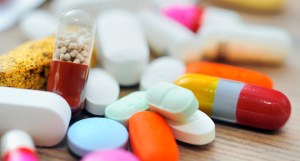 ked eye, that is). The danger of counterfeit drugs is the fact that, while 20 years ago most of them were just placebos, now they contain some amounts of active ingredients that can make a person feel somewhat “better”. The problem is that such various doses of active ingredients are not tested and can cause serious health issues. US has very strong regulation and monitoring of drugs so you are extremely unlikely to just buy some at a local store. You can get exposed to them, however, if you use online pharmacies. Many “fake” pharmacies based in China look legitimate and claim to be based in US or Canada.
For info on safe internet pharmacies: http://www.safemedsonline.org/who-we-are/principles-participation/
BOTTOM LINE: Food policy and regulation is a very complicated issue!!! Obviously a lot is done to keep our food safe, but the food QUALITY subject is very unclear due to different perceptions of “healthy” foods, the complex nature of nutrition science and the huge amount of conflicts of interest.

 Also, adding sugar to bitter foods makes them taste less bitter; adding sour- more bitter.
 Mariya V. PhD