Food Regulation course at O’Neill Institute!

Last week I participated in the Summer Program on Emerging Issues in Food & Drug Law at Screen Shot 2014-07-25 at 11.13.13 AMGeorgetown Law. Other than making D.C. my most favorite US city ever, I met interesting people from various health organizations in US, EU, India, China, and South America!

While a lot of the information went way over my head (considering I have no background in law or drugs!), there are a couple of interesting things I learned:

  • US imports a lot of food! About 80% of seafood and about 50% of fruits and 20% of vegetables is also imported.

This means that food safety monitoring requires a global regulatory environment and FDA (food&drug administration) has posts worldwide (China, India, Mexico, Costa Rica, London, Brussels, Africa). Most people I interview are concerned with food’s effect on their long-term well-being mainly because they don’t see food safety in terms of immediate harm as a big issue. That is the privilege of living in a well-regulated country like the US.

Our speakers gave an example of locally produced cheetos-like snacks somewhere in Africa that, aside from the fact that’s not a healthy thing to consume in general, were found to contain actual orange paint, rat droppings, and some heavy metal contamination. Another example of poor food safety regulation that we don’t have to worry about here is a story from my mom: around the time Ukraine became independent she bought a chocolate bar with raisins. After being unable to chew on the raisin for awhile, she washed it to discover it was a raison-shaped PIECE OF PLASTIC. Now THAT is scary. 😦

  • Differences in the way US and EU (European Union) regulates foods.

The most crude way to describe the difference is that EU takes a precautionary approach (e.g. GMOs might have bad effects years later so we’d rather limit them) while US takes a free market approach (there’s no evidence GMOs have adverse health effects, so why limit them?). I have to say most of us in the auditorium sided with the EU mentality as waiting for evidence that something is bad is more reassuring than proceeding due to lack of evidence. We know science takes time and the issue with GMOs is that their safety studies would have to take decades.

  • FDA regulations!asdf

The FDA does a lot of great work yet it can be quite hard to understand this agency’s ways. Mainly I was interested in how they regulate food health claims on products. I found out that if a product
makes a general structure/function claim (e.g. nuts are good for your heart! carrots maintain good eyesight!) the FDA doesn’t care much as they have less authority over such statements. If you, however, make a HEALTH CLAIM (e.g. nuts prevent/cure heart disease!), the FDA has authority to conduct a pre-market review of such health claim.  They need to see that the proposed food’s health claim is TRUE according to a narrow set of guidelines/that the product successfully performs the promised benefit: e.g. that consuming nuts actually affects a certain established biomarker of heart disease (e.g. one established biomarker would be LDL cholesterol). If your product has a health claim the FDA has not reviewed they would send you warming letters and can shut you down.

I understand this part can bother a lot of people who are trying to eat healthily. E.g. several years ago FDA222222 sent warning letters to a walnut company warning them about claiming walnuts prevent heart disease (i believe?). A lot of people in the health community were outraged. But think about a different example- Kellogg mini wheats. They claimed that kids will perform 20% better in school when eating them for breakfast. They then claimed the cereal increases immunity. Then Activia claimed their yoghurt benefits digestion. All lost in lawsuits as their own studies did not support such claims. So, while many of us are biased toward natural foods and were mad about the walnut case, you see where such regulations come handy and are necessary across the board. Also, the claims have to be supported by recognized science, which means that if some studies show your product is amazing for condition X, while others studies show no effect you have to report about both in your claim.

  • Something i was particularly interested in was comparing food quality standards (vs. food safety that FDA is mostly concerned with) in Ukraine and the US.

The Ukrainians I interviewed last summer had very low trust in the quality of food produced in Ukraine. one of the main reasons was the fact that after the fall of USSR, the Government Food Quality Standards became weak and prone to manipulation by the industry. During USSR, there were set food standards called “Recipes” that spelled out what makes up a certain product. E.g. a sausage ought to have a certain percentage of high quality meat.

"Belorussian Goods: High USSR quality". Ukrainians love belorussian foods as the country maintain the high standards for foods created during the Soviet era
“Belorussian Goods: High USSR quality”. Ukrainians love belorussian foods as the country maintains the high standards for foods created during the Soviet era (unlike Ukraine)

Nowadays manufacturers can create their own “recipes” and thus make “sausage” that is 80% soy. I asked the food standards question and learned that US has “standards of identity”  which is also a “recipe”. These standards of identity are mandatory, federally set requirements that determine what a product must contain to be marketed under a certain name in interstate commerce. So an ice-cream is supposed to have real milk, for example, and some other ingredients. Just like in Ukraine, though, manufacturers can bypass these standards by simply labeling their product something else (e.g. “Gelato” you might see on the shelf is not called ice-cream for a reason- it does not have the correct ingredients to be called an ice-cream). Violating standards of identity can be either good or bad for us. Good:  perhaps new recipes of old products can contain healthier products (e.g. almond milk in an ice-cream type of dessert), but the dark side here is that manufacturers can pack products with cheaper unhealthier ingredients. In Ukraine, the second situation is the case: many foods have low quality (e.g. a lot of people distrust Ukrainian butter as majority of it is actually palm oil). More here  http://uspolitics.about.com/od/usgovernment/a/fda_identity.htm

Unrelated to the topic of food.. i learned that counterfeit drugs is a scary issue! Prescription drugs are quite easy to “fake” and most of them look identical to the original product (to the na111ked eye, that is).  The danger of counterfeit drugs is the fact that, while 20 years ago most of them were just placebos, now they contain some amounts of active ingredients that can make a person feel somewhat “better”. The problem is that such various doses of active ingredients are not tested and can cause serious health issues. US has very strong regulation and monitoring of drugs so you are extremely unlikely to just buy some at a local store. You can get exposed to them, however, if you use online pharmacies. Many “fake” pharmacies based in China look legitimate and claim to be based in US or Canada.

For info on safe internet pharmacies: http://www.safemedsonline.org/who-we-are/principles-participation/

BOTTOM LINE: Food policy and regulation is a very complicated issue!!! Obviously a lot is done to keep our food safe, but the food QUALITY subject is very unclear due to different perceptions of “healthy” foods, the complex nature of nutrition science and the huge amount of conflicts of interest.


Health- The New Religion

I despise healthism… which is strange for an ex-health nut who managed a health food co-operative and taught raw vegan cooking classes for several years. Let me tell you why the importance of being healthy in the modern age can be quite irritating and perhaps even…unhealthy.

What is healthism?

Healthism is the modern trend towards promoting personal responsibility for health, placing an increasing focus on individuals to create the perfect healthy body. Healthism represents virtuous living as a moral accomplishment and this trend has taken on some of the religious attitudes toward foods (e.g. the moral sin of gluttony).

Sounds like taking responsibility for your  health is a wonderful thing. Indeed, it is quite beneficial to “take care” of yourself by trying to eat nutritious foods, stay active, continuously educate yourself on the health consequences of various choices…. because the modern environment has made the “normal” lifestyle quite problematic (sedentary behavior, cheap junk food, and what not).

Screen Shot 2014-02-09 at 5.22.21 PM

The problem, in my opinion, is the fact that these personal decisions have increasingly become morally-laden decisions. It’s evident that the “health religion” is spreading through the fact that people make moral judgements about others’ worth based on what and how they eat (there is a number of studies showing that people view strangers who eat “healthily” as more virtuous, less likely to cheat, less lazy, and what not). Of course, moral judgments also are applied to the physical manifestations of presupposed internal qualities for those who are overweight (e.g. lack of self-control, greed).

On the other hand, our culture encourages the enjoyment of food- at parties, special occasions, when socializing.. You’re not “fun” if you’re too strict with yourself (surveys also show people perceive those who eat healthier (while more moral) as less interesting and nice to be around socially).

*** Photo on the right- Not only does it imply that your health is completely your responsibility (which is a bit of a privileged view, you might say, since not everyone has the opportunities to eat organic or exercise) but it is your moral responsibility to the whooole world.***

Continue reading

To Fry or Not to Fry: The Acrylamide Question

Are you one of the many people that enjoy a crispy toast, some roasted potatoes,Screen Shot 2013-12-02 at 9.52.42 PM or really anything with that delicious crunch?  What’s not to love- such food has pleasant texture, is often tasty, carcinogenic… Wait, what?

Well-cooked foods indeed contain a compound that is known to cause cancer in animals and, likely, in humans. Before we all panic even more than we already do about healthy eating, let’s start from the beginning. What is this compound and why does it lurk in some of our most favorite dishes?

Some Background

Actually, I will start even further: Cooking itself is a crucial human skill. Not only has it allowed us to cooktransform our environment by making inedible and toxic wild foods edible and safe, but it might have made us uniquely human. One of the major theories of why we have such large sophisticated brains is actually based on diet- learning to tame fire provided a lot more calories for the expansion of the brain in our evolutionary past (check up “Catching Fire: How Cooking Made us Human” by anthropologist Dr. Wrangham for more). Dating back to 400,000 years ago at least (with some suggestive evidence dating to about 1.6 million years ago), cooking is an activity to which we seem to be well-adapted, as suggested by our shorter digestive system and smaller jaws. Yet, this important human innovation is not without issues.
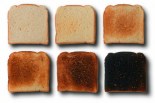
 

Back to that potentially cancer-causing compound found in some cooked foods. The name is acrylamide and it is a product of an amino acid (found in many vegetables) that forms at high temperatures. Acrylamide would thus breadbe found in many starchy foods cooked via frying and baking (the magic number seems to be over 120 degrees C or 248 F). The process that creates acrylamides is called the “Maillard Reaction” and is a chemical reaction responsible for the browning of foods when cooked. So if you look on the sliced bread photo on the right, you might guess that the darkest charred piece is highest in this compound. And you would be right.
The health concern with acrylamides did not actually start with diet, as this chemical has been used in toastconstruction, cosmetics, and water treatment for the last 60 years. In 1994, it was classified as “probably carcinogenic” to humans based on animal studies (establishing safety guidelines for it in drinking water, food packaging, and occupational exposure). In 2002, however, the scientific community was alarmed to find out that high acrylamide levels can be found in common popular foods- coffee, fried potatoes, breakfast cereals, and baked products.

That’s troubling news is you are a graduate student relying on a constant supply of coffee and cereal, I must say. Or if you are just about anyone in this fast-paced world, really. 

Acrylamide (AA) does not form in dairy, meat or fish products.  Other than diet and occupational exposure, a huge source of acrylamides is tobacco. Smokers have 3-4 times more AA adducts (when they measure AA levels in blood) than those that don’t smoke. How does it cause cancer? AA is readily absorbed and metabolized in the body to glycidamine, a known animal carcinogen shown to have mutagenic effects and cause damage to chromosomes.

Should we worry & how much?

So how dangerous is this compound to our health anyway? Should we throw away our baking cookbooks? Avoid coffee shops like the plague?

I have picked three published studies on the topic: a large critical review of multiple studies on dietary acrylamide (AA) and various cancer risks (2011), a case-control study in Sweden (2011), and a cohort study in Europe (2013). While I provided a short summary of each at the end of this post, their results can be summarized in the following sentence: epidemiological studies consistently suggest a lack of increased risk of most types of cancer from dietary acrylamides. Sounds like good news. The Food & Drug administration, however, is still concerned and provides tips on reducing this “chemical contaminant” levels in one’s diet HERE. The major points are:

  • Fry less & avoid overcooking (burning, heavy crisping). Least acrylamide-forming cooking methods are boiling, steaming, and microwaving .
  • Eat a healthy balanced diet: one that contains a variety of fresh plant foods (fruits and vegetables).

Take a look at these tips again- these isn’t anything shocking or new here and you probably already know that these are great strategies to feel well and maintain a healthy weight. While using less AA-forming cooking methods allows you to have less acrylamides in your diet in the first place, eating a plant-rich diet might reduce the effect of these compounds already in your food. Surely you’ve heard of antioxidants in fruits and vegetables and that they are somehow good for you. Antioxidants can prevent or delay cell damage and may lower your risk of certain diseases- such as cancer (see this short MedLine Plus article). Also, there is research showing that they can significantly influence acrylamide formation (Xu et al, 2014).

Take-home message

The “common sense” healthy eating advice you probably already heard has a new exciting twist: not only is a diet rich in fresh fruits and vegetables and low in many fried convenience snacks or fast foods is good for a healthy weight and overall health, but it also decreases the amount of potentially cancer-causing compounds that can be found in so many modern foods!

Many of us have hectic lives, so quick and convenient foods will remain a part of them.. yet easy changes to your meal preparation can be still made for a healthier diet. And no need to stress over that morning coffee!


I want to learn more!
Additional Information


Summaries of studies examined

1. CRITICAL REVIEW & META ANALYSIS*

These folks looked at studies that measured dietary intake of AA, intake of AA-rich foods (french fries, fried potatoes), and measured actual biomarkers of AA in the body (took blood samples), which is nice since asking people about what they eat is a mess (people forget, people lie, etc.).

The researchers found a lack of increased risk of most types of cancer from dietary and occupational exposure to AA. One of the studies they looked at showed significant increase in risk of kidney and ovarian cancer from high AA in diet (59% increase and 78% increase), but others showed no increase in risk at all.

2. SWEDISH CASE-CONTROL**

This was a nationwide study that looked at >600 people with esophageal cancer vs. 800 healthy individuals. They assessed their diet with a food frequency quesionnaire (this long thing you fill out asking whether you eat different foods and how often… they asked you to estimate your food intake over the last 20 years!!).

These guys concluded that AA dietary intake in the Swedish population might result in increased risk of the cancer. There was a 23% increase among those consuming the highest amount of AA in diet, and this association was even stronger (88% increase!) in obese individuals.

3. EUROPEAN COHORT***

These guys followed > 470,000 people for about 11 years and had 865 folks with pancreatic cancer. They asked people about their diet (that long questionnaire again) + asked about details of cooking (temperature and methods of cooking) which is very important for AA estimation since it can vary with cooking methods. Researchers found NO ASSOCIATION between high AA intake and risk of pancreatic cancer.

(P.S. interesting fact- Denmark&Netherlands had the HIGHEST intake of AA from food (esp. among men) while Italy had the lowest. It’s all that coffee in the North, perhaps?)

Word of caution in interpreting epidemiological research

I want to raise a couple of warnings when looking at epidemiology work related to nutrition. Indeed, nutrition research seems to drive people crazy: one day coffee or eggs are bad for us, another- they provide positive health effects. How do you make sense of it all? It is important to understand the hardships that nutrition research must constantly deal with. Like with many specific nutrients and compounds, measuring acrylamides in foods is actually extremely hard. You first have to assess someone’s diet correctly (people don’t only forget what they eat, but they even lie in surveys to appear healthier), then estimate AA content through food questionnaires (because they are cheap and easy to collect, that’s what most large scale studies use) which can vary drastically between brands and cooking methods. Lastly, even the database for AA content of various foods are limited- if you can not physically measure AA levels in what people eat (which you wouldn’t-such research would be tremendously expensive!!), you can reference existing databases that have AA contents of various foods. Such databases, however, might not have the exact food items you’re looking for and you’re stuck with estimating again. Lots of opportunities for mistakes here- a database might be based on a European region and you are studying diets in the US.. Or the AA amounts they have are from foods measured in 2002 and you’re trying to calculate AA in diets from the last 20 years.

This is an enormous problem as you are simply measuring AA intake incorrectly (misclassifying AA intake) and the lack of association between dietary intake and cancer risk is really due to the measurement errors.  In plain terms- we don’t see association between cancer and AA levels in diet not because AA doesn’t increase cancer risk, but because the methodology issues of studies do not allow us to detect this true risk. You might have heard that randomized controlled trials, as the gold standard of epidemiology, give the highest level of scientific evidence, so why not just do a bunch of those on acrylamides? Well, it would be quite unethical to randomize people to the high-AA group and feed them la diet of french fries and burnt toast with the expectation that it will cause cancer.

*Pelucchi, C., La Vecchia, C., Bosetti, C., Boyle, P., & Boffetta, P. (2011). Exposure to acrylamide and human cancer—a review and meta-analysis of epidemiologic studies. Annals of oncology, 22(7), 1487-1499.

**Lin, Y., Lagergren, J., & Lu, Y. (2011). Dietary acrylamide intake and risk of esophageal cancer in a population-based case-control study in Sweden. International Journal of Cancer, 128(3), 676-681.

***Obón-Santacana, M., Slimani, N., Lujan-Barroso, L., Travier, N., Hallmans, G., Freisling, H., … & Duell, E. J. (2013). Dietary intake of acrylamide and pancreatic cancer risk in the European Prospective Investigation into Cancer and Nutrition (EPIC) cohort. Annals of oncology, 24(10), 2645-2651.

Other citations: 

Xu, Y., Cui, B., Ran, R., Liu, Y., Chen, H., Kai, G., & Shi, J. (2014). Risk assessment, formation, and mitigation of dietary acrylamide: Current status and future prospects. Food and Chemical Toxicology, 69, 1-12.

Freshman “-5”

I never heard of “Freshman 15” until my first year in graduate school studying public health… since I never had been a freshman in the United States. It seemed like a rather obvious fact- I knew very well the food environment on campus and how one can gain weight quite easily in it. Yet when I told my friends and family back in Ukraine, they were quite amused and surprised- how can you gain weight in college!?

When I moved to Kiev, the capital of Ukraine, for my freshman year in 2003, I heard references to the “poor student” from all directions. Apparently, a new university student was poor, hungry, and rather slim. This idea is mostly based on the student image of the previous generation, however. The students in 2003 were not as pale and hungry as my parents remembered it- but they were definitely poor and slowly losing weight due to not having home-cooked meals made by moms as before. In 2003 students had more choices to eat out, but the prices prevented us from doing it often- you ended up cooking at home, snacking, or eating at the cafeteria. Indeed, many ended up losing weight, thus the freshman “-5” (about 2.5 kilograms; my term, arbitrarily chosen just like the “15”).

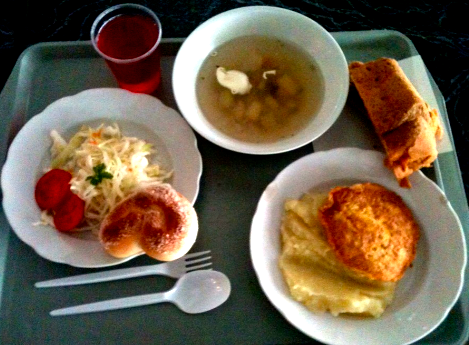
The following picture is of a cafeteria “full/wholesome lunch” at one of the biggest universities in Kiev taken several days ago. It costs $2.50 and includes: fresh broth-based warm soup, small cabbage salad, main course of a meat patty and mashed potatoes, piece of dark rye bread, and “kompot” (freshly boiled fruit drink) as well as a small pastry (dessert, I suppose). Approximately, a meal like this is roughly 700 calories. It would probably be the main meal for a student, who grabbed a quick breakfast and will attempt to make some food at home at the end of the day.

Image

The main feature of this wholesome/full lunch is- while one might not necessarily consider the addition of pastry, potatoes and a piece of fried meat healthy- the portions are very conservative. The opportunities to overeat are indeed limited.

It would be unfair to compare this to an “American” lunch since a standard American lunch does not exist- the dining halls are using the buffet style so a student is free to choose as healthy or unhealthy as they want. Of course, based on the numerous freshmen focus groups last semester, the common sentiment is that choosing “healthy” is quite hard and annoying: the salads are tasteless, the fried and burgers are omnipresent and a dessert lurks around each food station corner. Plus there’s constant social snacking and eating out- taco bell at 2am, burger king for a cheap dinner… Gaining a freshmen 15 is no problem at all.

On the other side, a Ukrainian student increases his/her physical activity by simply going to and from the university (often a trip of about an hour each way), lack of pocket money for fast food, and rather appropriate (and I would argue “healthy”) home meals at the cafeteria.

It is simply the difference in environments– Ukrainian students do not possess a superior understanding of healthy eating necessarily or boast superhuman will-power capabilities.. they are constrained by resources and are exposed to the environment where overindulging opportunities are lower than, for example, at an American university.

P.S. I also believe more eating norms exist in Ukrainian culture that might prevent overeating and junk food consumption in general..but that’s hard to argue at this point.

Why Nutrition Science Doesn’t Suck.

Last semester I couldn’t help but complain to friends that nutrition science simply “sucks”: never-ending conflicting information, inability to prove even “common sense” knowledge (e.g. refined sugar is bad!- nutrition science can not definitely prove that it is…is it because people overeat sugar? is it because they overeat in general? is it because they lack key other nutrients?]. Uh, I have read scientific papers showing that adding refined sugar to diet does NOT lead to weight gain, others that showed it definitely does, etc etc etc.

Now that I sit in my nutritional epidemiology class… i finally “feel” for nutrition and understand why it tends to be so messy. Continue reading

Ukraine and US- Food&Health

Image
Tea time at home 🙂

As my yearly trip to Ukraine came to an end, I sit on the porch drinking my green tea with saponins at 6am (still jet-lagged) and reflect. Something happened during this particular trip- probably due to the fact that I traveled with an “anthropologist” mindset this time around as I had an assignment.

What happened is that I lost my idealistic view of the Ukrainian diet- some morally superior way to eat and take care of one’s health. I realized this as I read yet another “alternative health” article on how Bolivians kicked out McDonald’s out of their country supposedly due to their preference for Real foods. That is very untrue- they simply could not afford to go to the place enough. They didn’t despise fast food in their fantastic and intuitive understanding of nutrition- they just didn’t have enough money to eat it frequently.

Image
Sugary water machine

The same fact struck me in Ukraine. But first- our obesity rates are much lower than in the United States [2010: 48.5% females & 41.2% males- overweight or obese. For US: 76.7% females & 80.5% males*]; slimness is valued higher (especially among young girls) as being overweight is almost unacceptable and publicly so. And yet, you see plenty of people with excess weight- only they tend to be on the older side. As in the United States, being healthy, fit, and in charge of your health is also a fashionable thing, so folks try to read up on nutrition and go to the gym, etc…

In terms of lower obesity rates- I also suspect the USSR legacy is at work here, where overindulgence of any kind was not OK. In USSR era variety was low, portions were small, and getting much than someone else was quire unpopular. This is just a tiny theory though. My other theory is that eating norms are different than those in the US- smaller portions and less snacking is more the norm (can not prove this yet), a normal lunch/dinner is thought to include a warm soup, combining heavy foods (e.g. meat, potatoes, bread) is seen as less ideal, eating out is much less normal than cooking at home..

Is our overall lower weight due to the fact that we choose to eat healthier than Americans?

Well, let me tell you- Ukraine has plenty of “fast food” spots around the cities. Most often they’re some deep fried combinations of bread and either sausages or cabbage.

Image
Street fast food

Of course we also have McDonald’s and you will never see it without a huge line. It is necessary to admit that vegetables are a much more natural addition to our diet in comparison to North Americans- many dishes feature vegetables (they are also the cheapest thing you can buy in a store) and many people know how to cook them in a tasty way. I believe there is less skill among US folks and that’s partially the reason they can’t get enough plants in their diet. Also, my observation has been that, even though Americans call really bad foods “junk food” they still eat plenty of it. The idea of snacking on junk in Ukraine seems to be less popular and a bit more unacceptable (not like I didn’t see folks on the streets with Coke or people buying chips at the store though..).

To summarize my thoughts in 1 sentence: I think Ukrainians are less heavy not because they eat healthier, but simply because they eat less for a number of reasons.

So.. what makes US obesity rates so much higher? Are people there simply more weak and ignorant about what and how much to eat!?  I don’t think so. I think the human animal is born with strong survival instincts- i think we are programmed to consume food, even in excess, since throughout the majority of our time on earth tomorrow was unpredictable in terms of nourishment. I believe it is natural to eat more than we need for this reason. United States simply created an environment that becomes unhealthy- opportunities to eat strong-tasting calorie-rich foods are too abundant, too varied, and too affordable.

Image
Slimness&fashion-  crucial tool for social mobility in Ukr.

Lastly, my thoughts and theories do not even begin to cover the potential reasons Ukrainians are not as heavy as Americans. Moreover, they could be simply wrong.  But no despair! My trip home was also a research trip- I collected 42 surveys on food and health.

Once I collect enough responses from Americans, I hope the analysis will give me a glimpse at the differences in the two cultures. Hopefully it will add to my understanding of our lower obesity rates. Would be good to make my opinions slightly more scientific 😉

* http://www.guardian.co.uk/news/datablog/interactive/2013/feb/19/obesity-map-of-world-weight

MORE PICTURES:

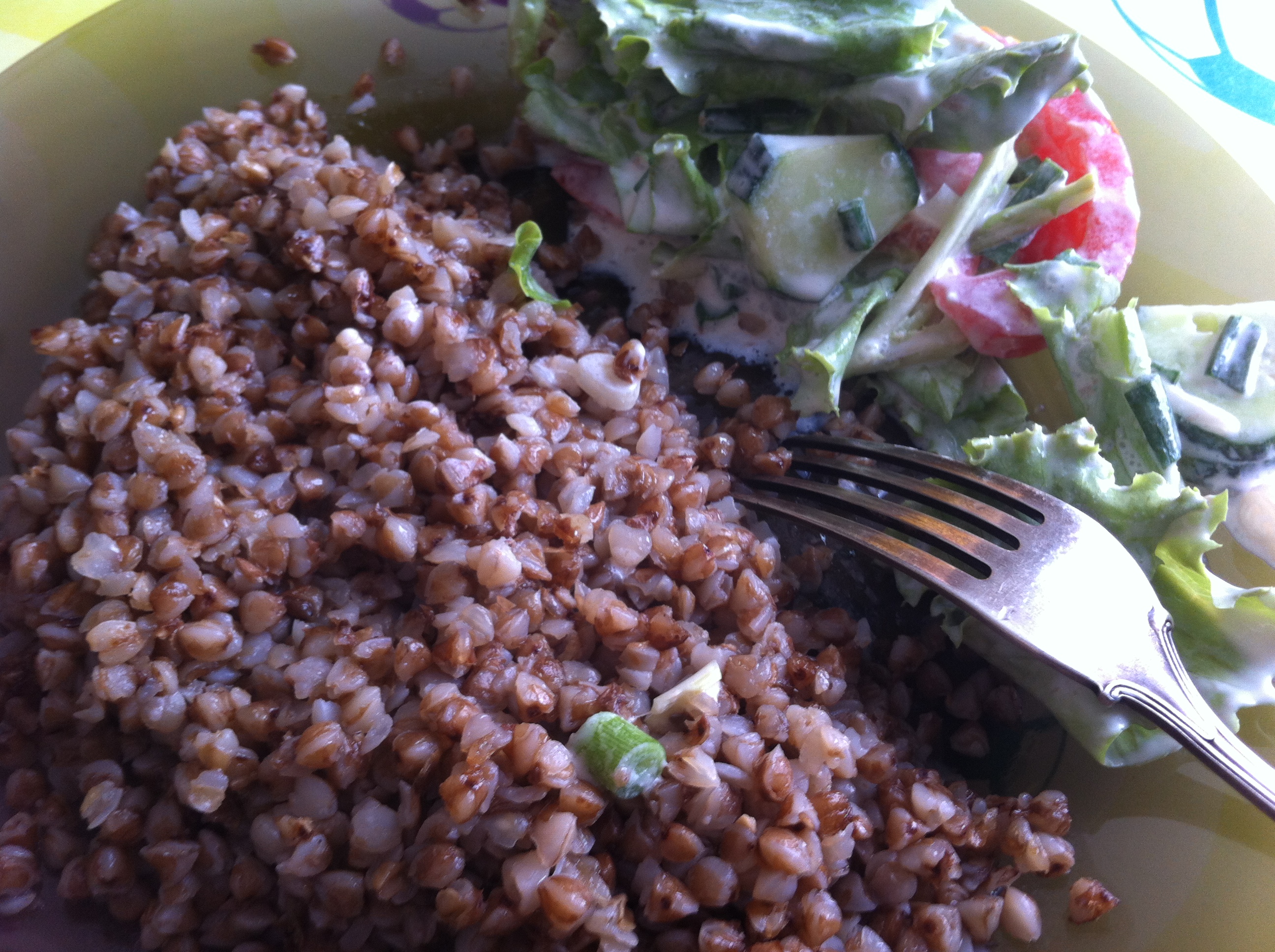
Buckwheat- a staple. Considered a superfood in US
Sushi is a terribly popular lunch item
Sushi & Japanese food is a terribly popular lunch item. (this lunch is $3)
Weight loss teas, coffees, and so on 🙂
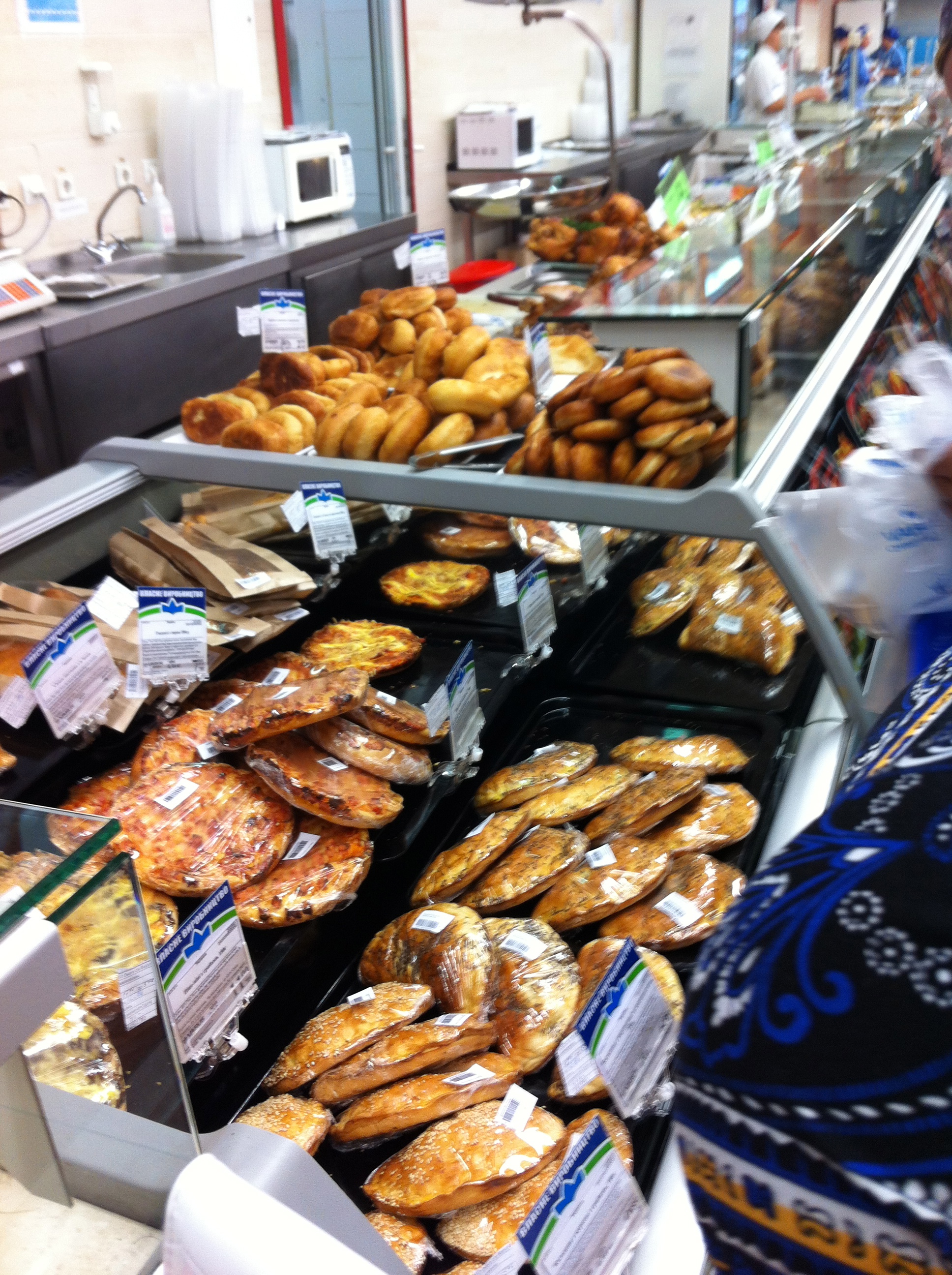
Lots of pastry items… Considered very fattening yet sell well.

PROTEIN

Finally I get to post about something not too many people are questioning..Protein overconsumption! 😀

Whether I talk to a body-builder or a dietician, health effects of eating too much protein do not seem to be on anyone’s radar (unless a kidney disease is suspected).

Beef it up!
In developed countries people are eating approximately 30% more protein than the RDA recommended intake (1.2g of protein/kg of body weight/day vs. 0.83g RDA). Yet this is considered harmless or even beneficial (for satiety, obesity prevention). In general, we can think of all kinds of anti-fat or anti-sugar arguments, yet protein seems to be the nutrient we don’t need to worry about. There are many protein-enriched snacks and drinks that seem to have a health halo effect. I think people are not even sure why the label claim “x grams of protein!” seems exciting or promising some sort of a benefit (unless one is a gym enthusiast). Perhaps it is the fact that we don’t know any “bad” health effects of this nutrient.

Longevity & health studies
In terms of living longer, calorie restriction(CR) is the only non-genetic intervention that can lead to life extension in different organisms (from yeast to rodents to monkeys and supposedly humans). Calorie restriction means reduced energy intake (moderate CR is about 30% less calories than recommended) without malnutrition. Studies on the famous Okinawa centenarians suggest it is their moderate eating that contributes to health and longevity.
So CR should not be confused with starving or extreme undereating- many people and cultures might do so without much thought- eating about 1700 calories/day for a person with 2000 being a goal is already calorie restriction.

In mice CR studies, general CR increases longevity and induces a reduction in the level of IGF-1 (insulin-like growth factor 1). IGF-1 is an important growth factor that mediates the growth of cells and inhibits apoptosis (cell death); it is IMPORTANT because there is considerable evidence that a reduction in IGF-1 signaling plays a key role in modulating cancer and aging in humans and rodents. HOWEVER, for us humans CR does not reduce IGF-1 concentration unless protein intake is also reduced. This suggests that protein intake is more important than calorie intake in terms of IGF-1 levels in humans.

Median protein requirement for a healthy adult, by the way, is 0.65 g/kg/day. Decreased protein intake discussed with CR does not go below this number.

image

mTOR
I first came across the idea of not going crazy on the protein while reading about mTOR. The mammalian target of rapamycin (mTOR) signaling system seems  to be connected with aging and cancer
development (also cardiovascular and neurodegenerative diseases). The insulin/IGF-1/mTOR pathway is downregulated by calorie restriction, and in turn activates other anti-aging pathways in mammalian cells.

Conclusion
It is necessary to see more human studies with caloric and protein restriction and the effect on health and longevity. We all know overeating is not great- it does lead to weight gain and associated health issues. But it also might be speeding up our aging, wear&tear, and increasing chances of various chronic diseases. This could be crucial for a culture that believes protein to be a healthy macronutrient which needs no limitation 😉

Some LINKS:

Why Protein is the new “It” Ingredient

http://online.wsj.com/article/SB10001424127887324789504578384351639102798.html

Macronutrient Balance and Lifespan

http://www.impactaging.com/papers/v1/n10/full/100098.html

Shall we Snack?

How we think about the food we eat matters. Really matters. The way you categorize your food- whether it qualifies as a meal or a snack- can influence whether & how much you will eat later that day.

Today we talked about snacks in the psychology of eating class. My personal cross-cultural observation of snacking between Ukraine and US is that Americans tend to snack more often.. they snack in various situations (at work, in class, on the run) and some believe snacking throughout the day is beneficial for weight maintenance. This perception comes from the idea that eating more small meals throughout the day (snacking) will keep your metabolism up or keep your hunger down. While it does elevate your metabolism somewhat, the problem is that most people can’t seem to eat “small” meals throughout the day… instead they end up simply eating all day long. In terms of hunger management.. it is quite individualistic- perhaps having a snack truly makes you less hungry throughout the day…or it makes you even hungrier (now, that depends on the snack too; carb-rich snacks tend to make us hungrier after consumption…and we can argue that processed foods have an addictive quality where you just have to finish the whole bag).

SNACK vs. MEAL

What’s a snack? Usually something small or in pieces.. it is eaten between meals. If you’re surprised by how someone might confuse a meal with a snack- people do think differently about which is which…some foods can be seen as both by different people- e.g. pizza or bagels (hey, some eat cereal for dinner!). Generally, though, “snack food” is perceived as food  not consumed to satiation (versus a meal); it also involves eating alone and for a short period of time.

A study by the ASU provost/my psychology professor Capaldi* showed that the cognitive feature of food (whether you perceive it as being part of a meal or a snack) moderates food intake regardless of hunger and satiety following a load. In simpler terms- if people ate the same amount of calories, but perceived the food as a SNACK, they ate more afterwards (even though their satiety level was the same as for those consuming the same food only seen as a MEAL). It has to do with norms- we feel it is much more appropriate to eat a full meal after some snacking then after a meal.

PROBLEMATIC DEFINITION
So your categorization of food might be important for how much you eat…This might be a problem with the way eating has evolved lately. Meals are generally seen as a sit-down occasion with utensil use…but in the hectic modern life your lunches and dinners might not involve a plate, fork, or even sitting down to eat. As a result, you might not register your lunch as a satiating meal and feel the need to eat later. Indeed, taking the time to eat in a calm atmosphere might make you feel more satisfied with your meal (has anyone else ever felt like they didn’t really eat if they grabbed something on the fly? I definitely do).
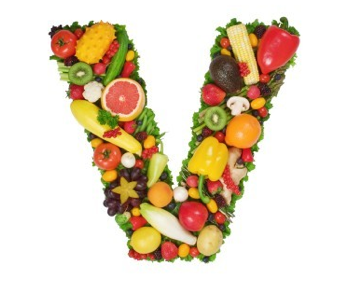
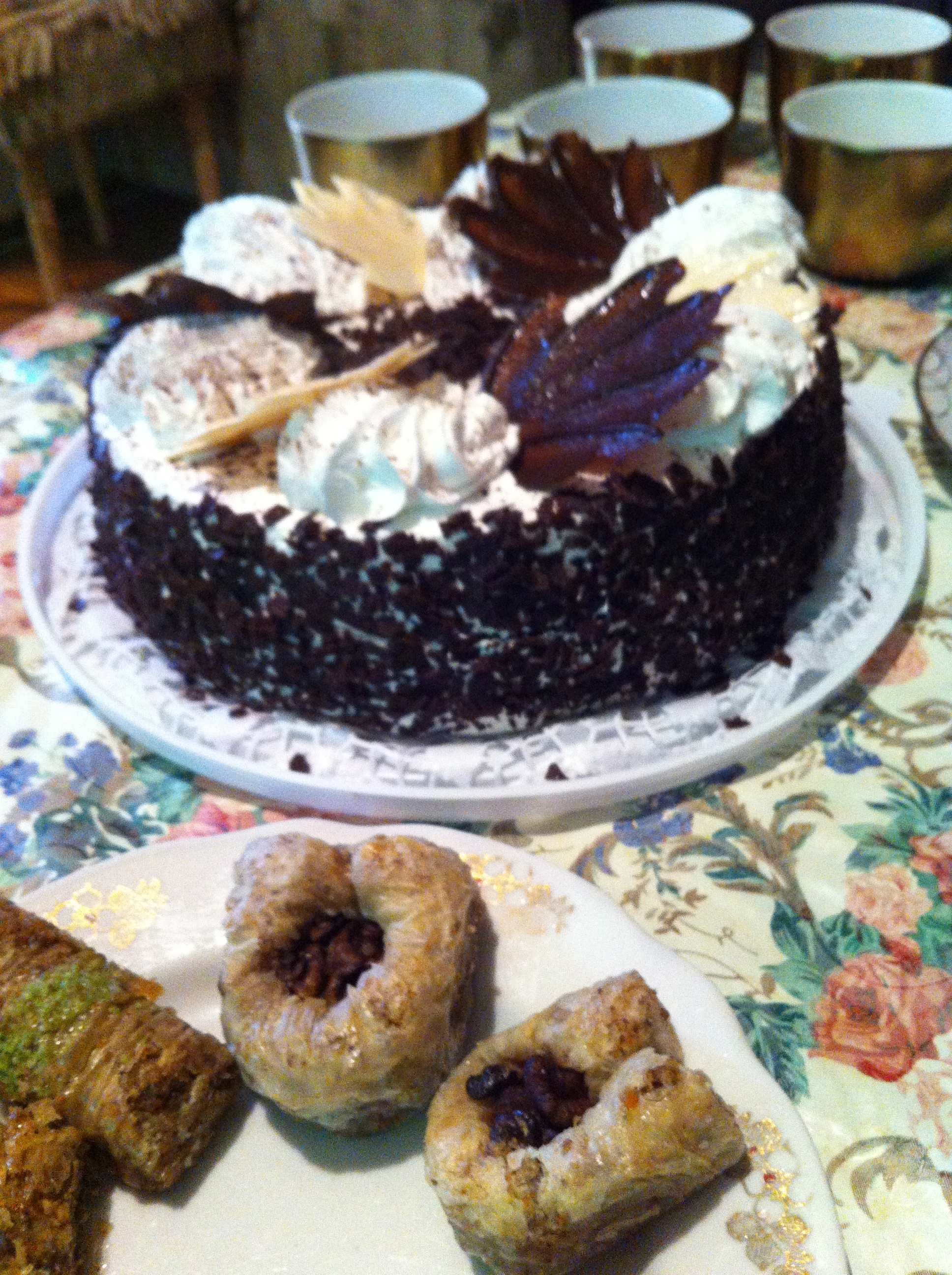
Shall we snack!? Currently,  evidence does not support many theories that encourage increasing frequency of eating for weight management**. Some suggest that snacking is one of the main causes of overconsumption and obesity***. In the end, you can’t recommend the whole population to either snack frequently or avoid it altogether. Some might find snacking to keep their appetite down.. while for others it may be difficult to control food quantities once they commence eating.  I suppose you should go with your gut and be mindful of whatever you are eating 😉

* Capaldi, E. D., Owens, J. Q., & Privitera, G. J. (2006). Isocaloric meal and snack foods differentially affect eating behavior. Appetite, 46(2), 117-123.

**Palmer, M. A., Capra, S., & Baines, S. K. (2011). To Snack or Not to Snack: What should we advise for weight management?. Nutrition & Dietetics, 68(1), 60-64.

***Buchholz, T. G. (2003). Burger, fries and lawyers: the beef behind obesity lawsuits. US Chamber of Commerce, US Chamber Institute for Legal Reform.

“New Perspectives on Vegetarian Diets” (Health Conference)

Today was the second day of the healthy lifestyles conference organized by Arizona State University and I was very much impressed by the vegetarian speaker! Actually, I know the professor, Carol Johnston, since I am involved with her vegetarian study..but this is the first time I heard her talk on the subject.Image

I was particularly impressed with the way she discussed limitations of vegetarian studies that many people do not consider (and many vegetarian researchers do not necessarily point out)-

  • The studies usually have many confounders (generally vegetarians studied tend to be more lean, educated, physically active, supplementation, no smoking/drinking, etc).. So a lot of their characteristics have nothing to do with meat avoidance but an overall healthy lifestyle
  • Studies showing fantastically superior health of vegetarians do so due to comparing vegetarians to national averages (which are not so great).  When vegetarians are compared to meat-eating groups who also follow healthy lifestyles, the difference in health is not as prominent.

Some important things to consider with vegetarian and vegan diets is B12 and Vitamin D (also zinc, calcium), since these populations do tend to be low in these vitamins. Dr. Johnston herself raised her two kids omnivorous, since she has concerned with a number of studies showing dangers of low B12 in small children. Indeed, during pregnancy one’s B12 decreases as well.

Some of the well-accepted benefits of vegetarian lifestyle are lower risk for colon and breast cancer.

Of course, Dr. J discussed the ecological piece and the importance of diminishing one’s intake of animal calories for those reasons.Image

Vegetarian for all??

I found it fascinating that once an audience member asked a question about recommending vegetarian diets to lower SES communities, Dr. J answered that she understands we have evolved on meat and we were meant to eat it, but in this day and age with disease, environmental issues, and low animal product quality (+ horrible animal treatment) vegetarian diets in her view are a better solution (but one might need to be a grown person to adopt it). She would not recommend going vegetarian in the 3rd world countries.

I loved the last comment, because my observation has been that people try very hard to prove our ancestral diet was vegan. It seems to be not so, but I don’t believe this fact is a reason against vegetarianism. I think Dr. Johnston’s view is very rational- you do not have to sell the vegetarian diet as the most original and natural for our species (it is not as evidenced by deficiencies due to animal product avoidance), you simply need to concentrate on the fact that this diet might be much better for you personal health, for the environment, and the animals.

P.S. Dr. Johnston also has fascinating research on vinegar and it’s beneficial effect on type 2 diabetes management and weight loss (just google Carol Johnston vinegar diabetes)

Meeting Mr. Paleo!

Is there anything more exciting than a health conference???

Well, there is always chocolate, but the conference excitement is quite comparable.

ImageArizona State University has organized a great conference “Nutrition for Optimal Health and Performance”.  Today’s lecture included speakers on athletic nutrition, debate on the High-Fructose Corn Syrup, and Paleolithic Nutrition.  Right now I shall focus on the Paleo presentation.

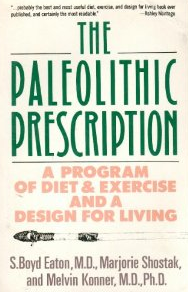
S. Boyd Eaton, MD from Emory University is considered the “father” of the modern paleo movement (you would know him from the Paleolithic Prescription book). He himself considers himself the “grandfather” since much of his original ideas have been somewhat transformed by other (younger) researchers (and he does not necessarily agree with all).

The Hypothesis

The presentation was not new to me, since I have read several of his papers.  In short, Dr. Eaton talked about the basis for the paleo health idea- the “discordance hypothesis“, according to which our genes and our lives are discordant (we adapted to a certain food and activity pattern, which is not matched by the modern sedentary/processed foods lifestyle)… The mismatch of the current obesogenic environment and our stone age genes are the reason we suffer from “western” diseases.  The human of 40,000 to 15,000 years ago is fundamentally identical to the modern human.Screen Shot 2013-02-08 at 8.35.37 PM

Then Dr. E talked about different % of meat subsistence of recent hunter gatherers which ranges from 20% animal products to 95%.  They/anthropologists take the 50% of animal protein in the diet  as the model due to the idea that most of us come from the savanna region of Africa (with 50% animal dietary intake).

He also discussed that anthropologists have rather good ways of studying old diets (human skeletal remains, archeological finds, recent hunter-gatherers, and proximate nutrient analyses).

The “Ancestral” Diet

The Paleo-Nutrition of East Africa (~50,000 years ago) is considered to be comprised of 35%, 25-35% protein, and ~35% carbohydrates. Of course the carbs, protein, and fat of long ago and the present day are not the same (obviously, less processed and more micronutrient rich; the fat was more polyunsaturated, more long chain PUFA, and less cholesterol-raising fat).  Other noted differences – vitamins and minerals were 2-8 times higher than average American intake; much higher potassioum-to-sodium ratio, the diet was more basic than modern acidic diets, and much more antioxidants than at present (generally 4x). Dr. E especially emphasized fiber- vegetables in the wild are much more fibrous.  Lastly, the energy intake was considerably higher, but caloric density was low (there was more bulk- more fiber, more water in food). Dr. E also talked about “free water intake”- most of the fluids consumed were part of the vegetables&fruits.

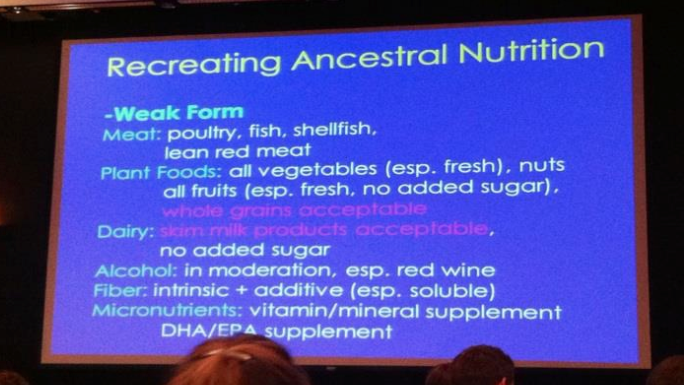
That’s all great, but here is something that was new to me. Dr. E himself differentiated between the “weak” and “strong” forms of the paleo prescription. It’s hard to say what all forms of “paleo” people out there are following, but my impression is that folks try to stay pretty strict with what they believe our “ancestors” ate. For a healthy normal individual, however, Dr. E’s weak form consisted of-

Image

The strong form (which seems to be the popular form as I can tell from talking to folks) is for people with “resistant health problems or who are unable to maintain desirable biomarkers” + competitive athletes.  This diet is what you would usually recognize as “the paleo diet”completely excludes grains, dairy, and alcohol.

The AfterLecture

The most exciting part for me was listening to Dr. E talk to a group of people after the presentation. A dietitian asked about the lack of legumes and beans in the paleo diet (she was upset about such nutrition advise). He commented that this was not something he necessarily agreed with at all, and that this idea originated with a different researcher (sorry, I can not remember who).  My friend asked how he viewed a paleolithic diet without meat (she is mostly vegetarian).  He said his understanding of meat avoidance is very much justified on ethical and moral grounds, considering the treatment of animals and their health (thus, the healthiness of their meat).  And if one could get their protein adequately from other sources that was great too. So he was not particularly married to one type of the ultimate human diet. Overall, Dr. E was a pleasure to be around.

My Comments on Meat Avoidance

Another dietetics student, who I know is a vegan since we are both involved in a vegetarian study, asked how he would respond to the massive literature on the health benefits of vegetarian diets and the problem of saturated fat from meat. Dr. E “politely disagreed” that vegetarianism was necessary for health but did not elaborate as much as we hoped. I understand the doc does not view being vegetarian as necessarily more healthy (considering you could do paleo with grass-fed free range meat and all). But I also wish he could talk about this further.Screen Shot 2013-02-08 at 8.29.54 PM

As someone who was vegan for 2 years and is very familiar with various health rationales for avoiding animal products, I have come to the conclusion that it is not necessary to exclude these products from the diet for health. Many cite The China Study by T. Colin Campbell, which is a book I also used to refer to (in brief, it shows the connection between animal protein and cancer). However, after looking into people who eat “traditional” diets (e.g. the Weston A. Price foundation diet), and seeing the vibrant health they enjoy… I had to come to the conclusion that all is not as black & white as I expected. In regards to meat & cancer, I am fascinated by new information on mTOR. Since I plan to post about mTOR in depth later, I will only say that it is a pathway that can be up-regulated if excess protein levels are detected in the body…in turn this stimulates cellular proliferation and adverse mitochondrial effects. In short- too much protein= increased risk of cancer. But note here that animal protein only in excess leads to adverse health effects, not animal protein per se. Supposedly, 45-60 g of protein per day for the majority of adults is a good amount* for longevity and avoidance of disease.

It was a pleasure to actually talk to the originator of the “paleo” movement, who himself is very balanced and rational in contrast to how the idea can be taken to extremes by many different people. The one thing Dr. E said is that obviously it is not sustainable for everyone to eat a paleo style diet any more, unless we decreased the world’s population drastically. Obviously, that is a different talk altogether.

*Gedgaudas CNS, CNT, Nora T. (2011-05-27). Primal Body, Primal Mind: Beyond the Paleo Diet for Total Health and a Longer Life (p. 196). Inner Traditions Bear & Company. Kindle Edition.