I recently wrote a short article on “food addiction” for the Risk Innovation Lab’s CrisBits blog (collaboratively published by Arizona State and Michigan University!). This piece mainly focuses on the scientific side of the issue- I really wanted to broadly cover research on the topic, since so many popular articles on food addiction focus on singular studies (and end up being extremely misleading). Yet I also really wanted to address the topic from an anthropological perspective.
… the notion of addictive foods attracts us on a much deeper level as well
So why are we.. almost addicted to the belief that “food addiction” is a thing? If you read my CrisBits article, you’ll see that there is (as of now) no actual evidence for any food ingredients causing addictive-like responses in humans. The field is highly debated, though: there’s plenty of scholars arguing pro and against. On top of that, the media often does a horrible job sensationalizing food addiction research (well, I suppose it does a great job sensationalizing, but a horrible job communicating the results correctly). All of that can surely create the illusion that science actually supports the food addiction theory. However, the notion of addictive foods attracts us on a much deeper level as well…

The allure of addictive foods
There is a strong cultural appeal in the idea that certain “bad” foods or their components can cause dependence and are thus dangerous (e.g. MSG, casein, gluten). This view of overeating as addiction includes the need to “detox” and instead eat a “clean” diet (e.g. this: The Diary of a Sugar Addict in Detox).
These are not just modern health trends, but a manifestation of a need to understand our world by imposing structure and thus meaning on the untidy experience that is reality. Structure is created by categorizing things into clean/unclean, healthy/unhealthy, pure/dirty- and things that don’t clearly fit into such categories are considered unclean and dangerous. Anthropologist Mary Douglas makes this point in her seminal book, Purity and Danger, as she examines food taboos (cultural rules about what not to eat). Douglas points that prohibited foods are considered “polluting” because they defy easy classification into culturally important categories. The current unease with genetically engineered foods is a fantastic modern example: as a technology that blurs the lines between natural and unnatural domains, it is indeed often termed by opponents as “genetic pollution” or “contamination”.
…prohibited foods are considered “polluting” because they defy easy classification into culturally important categories.
The categories we create to make sense of the world have strong moral overtones, as they allow us to essentially define right and wrong. Indeed, the word “addiction” itself is connected to the moral disapproval of socially undesirable behaviors (e.g. drug abuse). Psychologist Paul Rozin points out how the fear of sugars in American diets, for example, reflects the Puritan belief that things that are very pleasurable must also be bad.
Religious Scholar Alan Levinovitz also emphasizes that people frame eating in terms of morality and religion. He discusses how concepts of healthiness reflect the “myth of paradise past”- the idealistic belief that things were better, healthier, and even morally superior before. From such perspective, novel changes to foods represent our fall from grace- whether via agriculture (e.g. as in paleo diet ideology) or industrialization and technology (as with processed and genetically modified foods).
So, that’s my little anthropological view of food addiction beliefs as a cultural phenomenon. Hope you enjoyed it!
P.S. You might see news reports on studies about food addiction.. but keep in mind that no clinical diagnosis for “food addiction” exists, and most such research uses a self-report questionnaire: the Yale Food Addiction Scale (YFAS). This tool uses DSM-IV’s generic criteria for substance abuse to measure addictive-like eating.
Most importantly, it does not validate the existence of “food addiction” as a true disorder (DSM diagnostic criteria is intended for trained clinicians, not a checklist for self-diagnosis via a simple questionnaire). This is a critical issue to consider, as most food addiction research with humans is based on diagnosing food addiction this way.



 Exciting day! Another diet-related talk at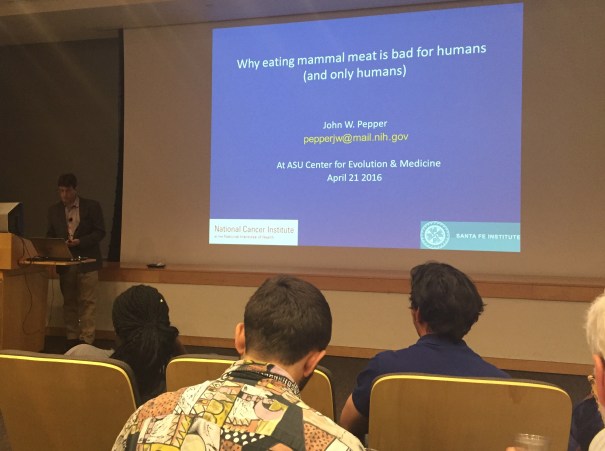


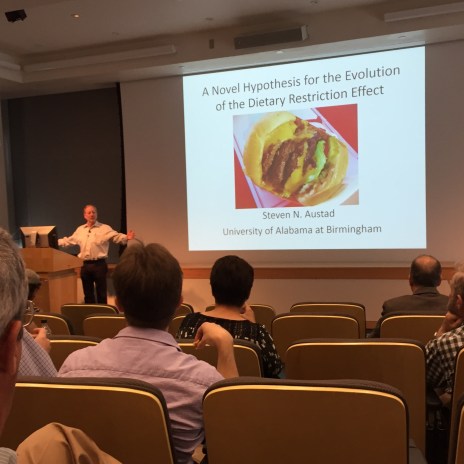
 (I wrote a whole research paper on it in the first year of my master’s degree). You might have heard of intermittent fasting (e.g. popular in the CrossFit world), or the CR Society ( http://www.crsociety.org/ )- all are related to the concept that restricting food intake results in health benefits (from extending life to preventing and reversing disease).
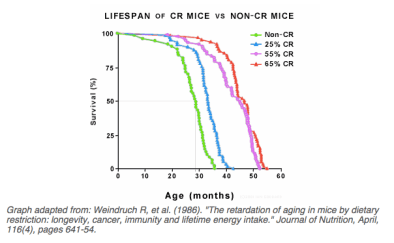 Why do many animals (and perhaps humans) appear to be so well-adapted to eating less? The traditional interpretation of this CR phenomenon is that the dietary restriction effect “has evolved as a way to enhance survival & preserve reproduction during periods of naturally occurring food shortage”. In other words- being adapted to do well on restricted food intake during rough times would have helped our ancestors survive them & stay healthy to have kids later when the food situation improves.
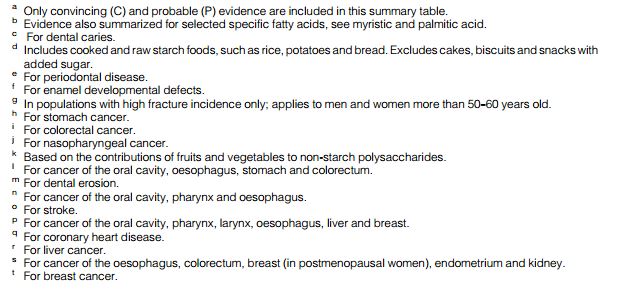
 dates back to the late 16th century, we still do not know the mechanism behind why DR seems to extend life and vigor in animals + delay disease such as cancers. METABOLISM was the original suspect, as metabolic rate goes down with fasting.. however, metabolic rate drops initially yet gradually goes back UP (takes 6-8 weeks to happen).. Since DR changes an unbelievable amount of physiological parameters (see screenshot ->) it is very hard to determine its mechanism.





 And yet the often entertaining arguments keep me coming back! The science folks vs. lay folks debates are also interesting since I am myself an ex anti-science alternative health believer who has now “switched sides” on many issues (or as I prefer/hope to think: turned much more moderate in my views based on understanding scientific evidence better).


 Mariya V. PhD